Greetings from New York! I'd like to analyze a very interesting game I played recently which might well contain the most insane tactical sequence I've ever played over the board (and that's saying something). Let's dive right in!
Graif, William (2354) - Paciorkowski, Lev (2415)
Marshall FIDE Premier, New York, NY (Rd. 5)
G/90+30
My opponent is a talented FM who is about the same age as me. William actually seems to have gotten started with chess much earlier than I did - glancing through his rating history he became an expert around the age of 10 or 11, while I did not even have a rating yet by that point! This was played in the last round of a Swiss tournament, and heading into the game there were six players tied for first on 3/4, including the two of us. So naturally, it means we have to play for a win this game, which definitely influenced some of my decisions...
1.e4 I don't recall having played William before but he had drawn GM Mark Paragua earlier in this event with the same opening he played against me this game. I generally keep my black repertoire a moving target and in this game decided to play a Sicilian.
1. ... c5 2.Nc3 Nc6 3.Bb5 (D)
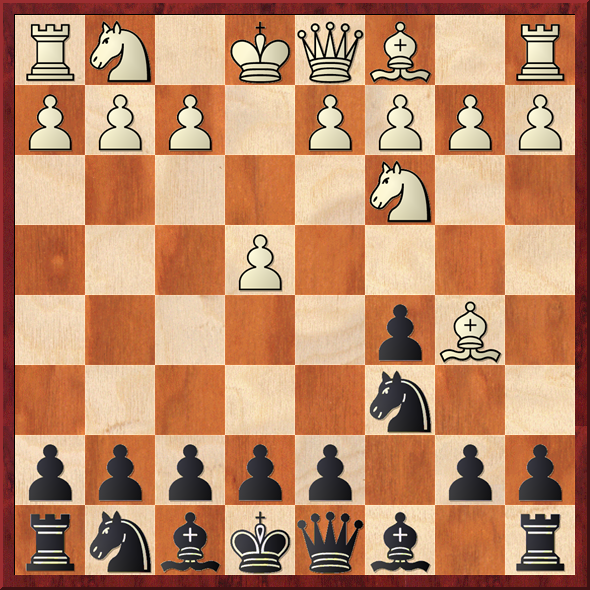
This was expected - the same happened in the Graif - Paragua encounter. I don't remember what Mark played, but this is actually already a critical position and believe it or not, black only has one good move here to maintain equality.It is quite instructive to point out why a routine developing move like 3. ... g6?! is a rather serious inaccuracy. White would continue with 4.Bxc6 bxc6 and now importantly, 5.f4! (D) - this position merits its own small analysis board, below:

What's going on here? Black has the bishop pair, but the problem is that there is no good way to open up the position. The break ...d7-d5 is always met with e4-e5. Playing ...e7-e5 for black will be hard to achieve: white simply puts a knight on f3, and you can see that even with ...d7-d6 as preparation, ...e7-e5 will still not be desirable because of f4xe5 when after exchanges the c-pawns will become permanently isolated and weak. In particular this c5 pawn is the source of black's problems. If our pawn ever leaves d6, then c5 becomes very difficult to defend, and white can attack it easily with b3-Ba3, Na4, and Qe1-f2 (after castling). The ...f7-f5 break is also bad, because again white locks things up with e4-e5. This actually means that already, after just five moves, white has a clear (but still relatively small) advantage.To give one illustrative sample line: 5. ... Bg7 6.d3 d6 7.Nf3 Nf6 8.0-0 0-0 9.Qe1 Rb8 10.b3 and the more time you spend looking at this position, the more you will realize that black lacks a good plan. Believe it or not, a strong engine will actually evaluate this as +0.7-0.8 for white, and I do not think that is an understatement! Having no good plan is a bad spot to be in.
So, going back to the position after move 3, black has only one move that is theoretically considered to equalize, which I played: 3. ... Nd4. This exploits the drawback to white's early bishop development - if I can snag the bishop pair without having ruined pawn structure then I *should* be better.
I put the *should* in asterisks here because white can try something clever: 4.Nf3! A good move, and the one usually favored by stronger players who employ this variation with white. The alternative is 4.Bc4!?, but moving pieces twice in the opening is unattractive and black should have no problems there.
But hang on, if white just leaves the bishop on b5, why can't black simply take it? Well, just take a look at the position after 4. ... Nxb5!? (which I did not play) 5.Nxb5 (D):
My goodness, what happened to black's development?! White has two knights out and is ready to castle next move. Black has no pieces out and is very far from castling. It turns out that unsurprisingly, white's lead in development here compensates fully for black's bishops. This is still playable for black - with very accurate play you will not be worse, but suffice it to say I choose to be pragmatic and consider this position too dangerous for black to enter.I knew all of this during the game, but I didn't have very much concrete knowledge beyond this point, so I actually make an inaccuracy on my next move: 4. ... g6?! "What could be more natural than continuing development?", you might think. But white can set a devious trap here, which my opponent thankfully seemed to be unaware of. This trap starts with the move 5.Bc4! (you can check a database to see that this move scores over 60% for white). The brilliant point is that after the natural 5. ... Bg7, white now plays 6.Nxd4 cxd4 7.Qf3! e6 8.Nb5 - threatening Nd6+, and after 8. ... d6 in comes the startling 9.Qa3!! (D)

The double exclam is for the sheer unusualness of this tactical idea. I checked the database and at least a few hundred unfortunate souls have fallen into this trap (including one 2600+ GM who I'll leave nameless...). If you play this line for white, then you'd have to keep yourself from smirking as black has to decide between pathetic moves like 9. ... Ke7 or 9. ... Bf8. Black can do better than play into white's hands like this, but will already have to inconvenience himself after 5.Bc4 to meet this awkward idea.So in hindsight, and after some analysis, I think the best move for black after 4.Nf3 is actually 4. ... a6! (which is the 2nd most common move, after 4. ... Nxb5!? - the move I consider to be too dangerous). People usually then play 5.Bd3, which looks odd but it is the only good square left for the bishop. In case of 5.Bc4!?, black can be bold and get a good position with 5. ... b5! 6.Bd5 Rb8 7.d3 e6 8.Bf4 d6 9.Bb3 a5! 10.a4 Nxb3 11.cxb3 b4 12.Nb5 e5! 13.Be3 Ne7 - this is very pleasant indeed for black. After 5.Bd3, now white is finally out of tricks and black can resume normal development with 5. ... g6. I will point out one last cute idea for black before returning to the actual game: if white plays the most common continuation with 6.Nxd4 cxd4 7.Ne2, then the accurate 7. ... d5! (D) equalizes for black:

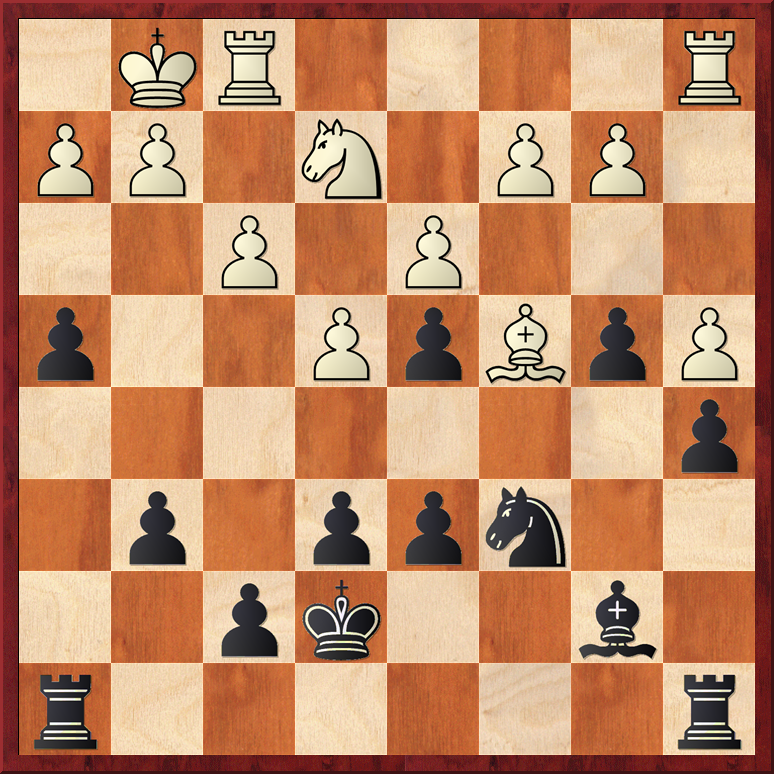
In fact white is the one who must be cautious here. 8.exd5?! Qxd5 is obviously good for black. 8.0-0?! Bg7 is also comfortable for black, because the desired 9.c3? runs into 9. ... dxe4 10.Bxe4 d3! -/+ with a big advantage. 8.e5!? looks tempting, but in fact black is also doing fine after 8. ... Bg7 9.f4 f6! 10.e6! (10.Nxd4?! fxe5 11.fxe5 Bxe5 12.Nf3 Bg4! -/=; 10.exf6?! Nxf6! -/= 11.Nxd4? Nh5! 12.Ne2 e5! -+) 10. ... Bxe6 11.Nxd4 Bf7 12.f5! Nh6 - that is a bit of an unusual position at the end, but black's king is safe and white is close to overextending.So actually, the best move for white after 7. ... d5! is 8.c3! when we now have a long forced tactical sequence: 8. ... dxc3 9.Qa4+! (9.dxc3 dxe4 10.Bxe4 Qxd1+ 11.Kxd1 e5! is no problem at all for black - this is identical to black's equalizer in Ulf Anderssen's anti-Grunfeld) 9. ... Bd7 10.Qd4 dxe4! (remarkable!) 11.Bxe4 (11.Qxh8? exd3 12.Qxg8 dxe2 -+ looks like a position that belongs in Amatzia Avni's Devious Chess, but black has terrific compensation for the exchange) 11. ... cxb2 12.Bxb2 Nf6 13.Bxb7 (otherwise white is a pawn down) 13. ... Rb8 14.Bxa6 Qb6! 15.Qxb6 (forced) 15. ... Rxb6 16.Bxf6 (also forced) 16. ... Rxf6 17.Rb1! (otherwise black keeps both bishops) 17. ... Rxa6 18.Rb8+ Bc8 19.Rxc8+ Kd7 20.Rc2 Bg7 = and when the smoke finally clears, white has no real hope of winning with an extra pawn thanks to black's strong bishop and active rooks. This long variation would never happen in an actual game (I can't see a human coming up with Qa4-d4 over the board), but it does show that black is fully equal after 7. ... d5!, and I think I have sufficiently demonstrated how black should play to meet the Nc3-Bb5 anti-Sicilian. I definitely didn't know most of this before analyzing this game, but now I will know it for the future.
Now we return to the actual game. After my inaccurate 4. ... g6?! white continued 5.Nxd4 cxd4 6.Ne2 Bg7 7.0-0 a6 8.Ba4 b5 9.Bb3 Bb7 10.d3 (D)
This position is somewhat deceptive. You might think (and I certainly did) that black would at least be completely equal because of the cramping pawn on d4, but things are not so simple. In actual fact, the pawn on d4 is more likely to be vulnerable than a strength, and we should notice that white has absolutely zero pawn weaknesses! My two fianchettoed bishops are also rather ineffective - one is blocked by white's pawn wall, and the other is blocked by my own d4 pawn. All this is to say that white is in fact slightly better.
The game continued 10. ... e6 I rejected 10. ... d5 because of 11.f3! (which is indeed white's best move) and I never want to take on e4 anyway because it would open the f-file for white's rook. 11.Qe1! A crafty maneuver that shows white is familiar with this structure. The queen can sometimes swing out to b4 or out to g3 after f2-f3. 11. ... Ne7 12.f3 Also worth considering was 12.f4!? 0-0 13.Qf2 with the point that 13. ... Nc6? is now bad because of 14.f5 +/- with a strong attack. 12. ... Nc6 13.Bf4 d6!? It might have been preferable to play 13. ... Qb6, meeting 14.Bd6?! with 14. ... Ne5 -/= 14.Qg3 (D)

That d-pawn is looking quite tender. At this point I had been playing fairly quickly: I had 75 minutes to my opponent's 58. This is the first critical moment of the middlegame, and I am happy to say that I made a strong decision here with little hesitation.14. ... h5! much better than 14. ... e5?! which opens up the Bb3 or the awkward 14. ... Be5?!. Nevertheless, white is still slightly better. 15.Bg5 (15.Bxd6?? h4 16.Qf4 Bh6 -+ wins a piece for black) 15. ... h4! 16.Qg4 (16.Qf4? f6! wins a piece for black; white has very limited compensation after 17.Bxe6 Qe7!, 17.Qg4 fxg5 18.Qxe6+ Qe7 19.Qxg6+ Kd7, or 17.Bxh4 g5 18.Qg4 Rxh4 19.Qxe6+ Qe7) 16. ... Bf6 (D)
The next critical moment, this time for my opponent. White is still better here but there is only one promising continuation; otherwise, black is completely fine.17.Bxf6?! This move I was very happy to see. During the game I correctly judged that white's best was 17.f4! when taking on g5 dangerously opens the f-file, and 17. ... Rh5? allows 18.Bxe6! Bxg5 19.Bxf7+ Kxf7 20.fxg5+ with a decisive attack. My intention was to play 17. ... Qe7, but now comes 18.Bxf6 Bxf6 and something like 19.h3, freezing the h4 pawn - white is better. It's not too bad for black, but I still will have some defending to do.
17. ... Qxf6 the difference is that now on 18.f4 I can play 18. ... h3!, forcing 19.g3 and permanently weakening white's king. And if 18.h3, then 18. ... Ne5 forces a queen trade. The engine thinks white should play 18.f4 anyway, but my opponent's decision is quite understandable, especially as he was starting to run low on the clock: 18.Qf4!? Qxf4 19.Nxf4 Ke7 (D)
I have escaped into an endgame that turns out to be very comfortable for black. Now my king is well-placed in the center, and I have a small space advantage thanks to the d4 and h4 pawns. Black is slightly better; and I have a healthy time advantage now of 66 minutes to my opponent's 25 minutes.Events proceeded peacefully with 20.Ne2 (Not 20.Bxe6?? g5! -+) 20. ... a5 a good decision, grabbing more space. 21.a4 b4 22.Bc4 (D)
Here I had my longest think of the game at 14 minutes. I was trying to decide what my long-term plan should be. In a perfect world, I could exchange my knight for his bishop and then establish a pawn on e5, but this isn't so easy to achieve. I thought about playing 22. ... e5 straight away, but I didn't like that white's rook becomes active after 23.f4. Really this is what the position comes down to now - who can successfully activate their rooks first. Eventually, I decided on quite an ambitious strategy.22. ... g5!? Perhaps not strictly best, but I like this move. I am threatening ...e6-e5 next when white will never be able to open the f-file, so white's next move is strategically forced: 23.f4 gxf4 24.Rxf4 Rag8 This is my idea - to use the open g-file to attack white's king. Already here I was envisioning some good fun - for example 25.Raf1 Rh7 26.h3!? Ne5 27.Nxd4? Nxc4 28.dxc4 f5! and my bishop suddenly screams to life from b7 with devastating effect.
The game continued 25.Bb5 e5 (I have no other way of defending d4 now) 26.Rf2 Nd8 (D)
My marauding knight has plans to jump to the kingside. This is actually a difficult position for white already. I didn't know what the objective evaluation was during the game, but I was already anticipating what could unfold over the next several moves...27.Nc1?! This was the move I expected, heading to b3 to attack a5. This looks like a strong plan, but white must take care about moving a defender so far away from the kingside and it turns out that this knight maneuver is just too slow. According to the engine, the only way for white to maintain the balance was 27.c3! against which I was intending 27. ... dxc3 28.bxc3 and then something like 28. ... Ne6 or even 28. ... d5, keeping the Ne2 dominated by my pawns. However, white could then exchange on b4 and create an outside passed pawn, which should compensate for my piece activity.
In the game, I continued 27. ... Ne6!? (27. ... d5! is actually even better, activating the bishop right away) 28.Nb3 Nf4 29.Kh1 (D)
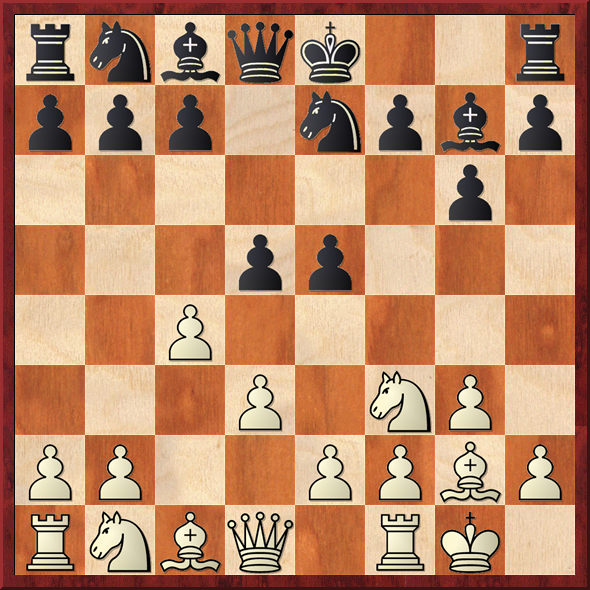
Here is where the game abruptly turns into complete chaos. I already had this idea in mind a few moves previously, and although I couldn't calculate all the variations to the end, I didn't see a direct refutation and judged that my opponent wouldn't defend perfectly in time pressure. So, I went for the bold 29. ... f5!? 30.Nxa5 fxe4!?! 31.Nxb7 e3 32.Rff1 Nxg2 (D)
This is a very difficult position to assess, even for the engine (mine incredibly thinks this is just equal). Black has only one pawn for the piece, but my powerful e3 pawn and white's weak king provide sufficient compensation. I didn't see a direct refutation here, and I do have some devious threats in mind if white just mindlessly pushes the a-pawn, which we will see soon...33.Bc4 a good move 33. ... Rg7 34.Rg1 also a good move 34. ... h3 35.a5!? e2 36.a6 (D)
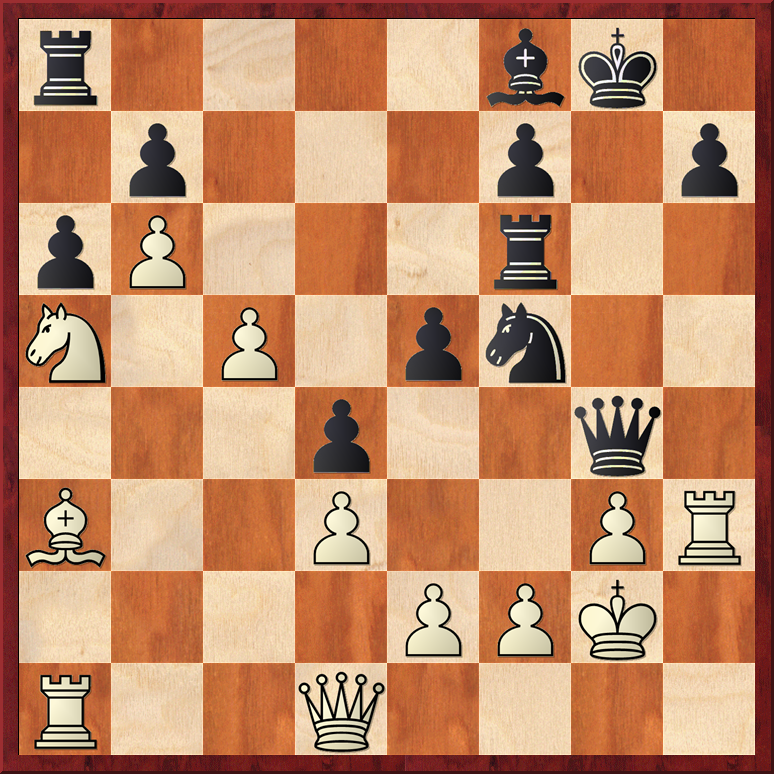
It's not obvious what black's threat is, so at first glance this looks good for white. 36. ... e1=Q? 37.Rxe1 is not playable (g7 is hanging), and it's not clear how black is supposed to make progress. However, I found what I can only say is an unbelievable tactical idea here, which looks like something straight out of a study. I played 36. ... Rg5! My opponent was visibly confused by this seemingly random move. 37.Bd5 and now 37. ... Ne3?! unfortunately this was the wrong execution and 37. ... Rf8! was necessary here, but in time pressure I couldn't get myself to play this slow move.I saw that white should now play 38.Bf3! and we would reach a still unclear but balanced position. However, you might be wondering - why not simply take my rook on g5! Well, fortunately my opponent did exactly that: 38.Rxg5? (D) The losing move, for an extraordinary tactical reason.
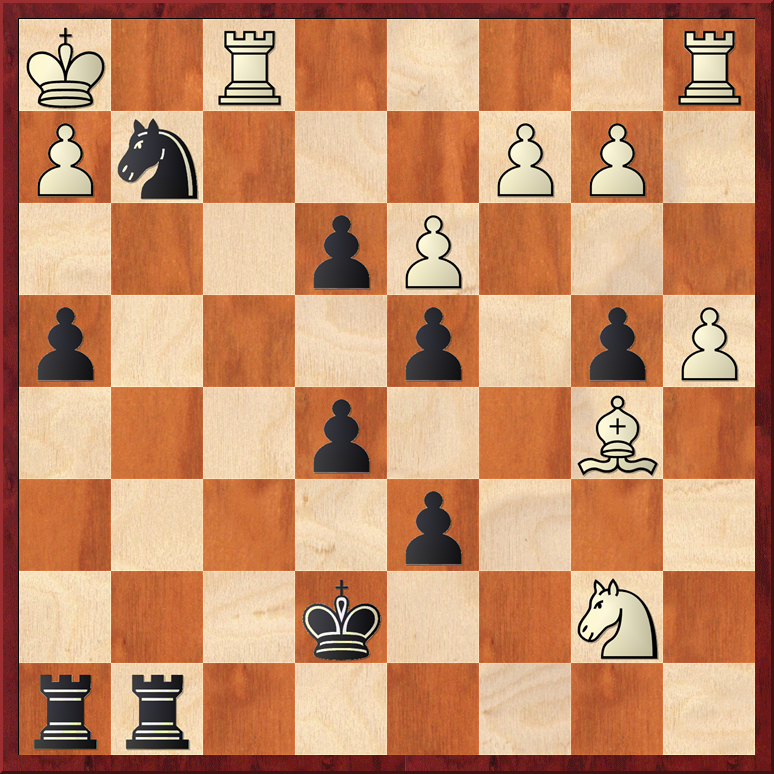
38. ... Nd1!! Holy smokes! I almost couldn't believe that this ridiculous move actually works. Black is down a full rook and a bishop, and it seems like white should easily be able to guard against promotion with two rooks on his first rank. But amazingly, it turns out that 39.Rg1, the only move to stop promotion, runs into 39. ... Nf2#!! How often do you see that kind of mating construction...White is lost now, but it is still tricky in mutual time trouble. The game continued 39.Rg7+ Kf6 40.Rxd1 exd1=Q+ 41.Rg1 Qxc2 42.Nxd6 Qxd3 43.a7! (D)
Things are not yet over! My king is actually in some danger and white still has a strong a-pawn. You would think that black must be winning somehow (and you would be correct), but can you find the best move with just a couple minutes on the clock?43. ... Qa6? incredibly, this gives white a golden chance to come back. Necessary was 43. ... Ke7! 44.Be4! (44.Ne4?? Qg2+) 44. ... Qe2! 45.Nf5+ Kf6 46.Ng3 Qxb2 white quickly runs out of checks and although it's still not trivial, black should be winning in the position after 47.a8=Q Rxa8 48.Bxa8 Qc2 49.Be4 d3!
44.Ne4+? Also with just a few minutes, white doesn't find the drawing resource. Amazingly, 44.Be4!! draws after both 44. ... Qxa7 45.Rg6+ Ke7 46.Rg7+ Kxd6 47.Rxa7 and 44. ... Qxd6 45.Rg6+ Ke7 46.Rg7+ Ke6 47.Rg6+ Kd7 48.Rg7+. It's not immediately obvious, but white also has perpetual after 44. ... Qa2!? 45.Rg6+ Ke7 46.Nf5+.
44. ... Kf5! Now white is officially lost. 45.Ng3+ Kf4 46.Rf1+ Ke3 47.Re1+ Kf2 48.Rf1+ Qxf1+ 49.Nxf1 Kxf1 50.b3 d3 51.Bc4 hoping for stalemate 51. ... Ke2 and white resigned 0-1
What a game. This 38. ... Nd1 resource was incredible - that really shows the power of even just one advanced passed pawn near the enemy king (the h3 pawn also helped). The opening was instructive to analyze as well.